

Abstract:
Hyperscalers are racing to train ever larger models, and the electricity needed to power them is rising just as fast. The critical issue is timing: generation and transmission upgrades often take 5 to 10 years, while data centers can be built in a fraction of that time, making the grid an immediate bottleneck for scaling AI infrastructure. How can we unlock gigawatts of grid capacity on a much faster timeline?
This talk highlights two lines of work from my group to address this challenge. The first is on accelerating large load interconnection via flexible connection programs that explicitly use load flexibility to advance energization. I will discuss why such programs can unlock substantial grid hosting capacity while requiring only infrequent load interventions (e.g., ~1% annual curtailment), and how utilities can trade off added capacity against quality of service. The second is on modeling and leveraging the couplings between the grid and flexible load systems, particularly data centers and electric vehicles (EVs). We will demonstrate how such couplings, when not properly accounted for, may lead to unintended consequences in capacity expansion processes, and how one flexible load system (e.g., electrified transportation) can facilitate the integration of another (e.g., data centers). Together, these tools and insights point to practical pathways for mobilizing near-term grid capacity while informing longer-horizon planning, market design, and policy.
Bio:
Junjie Qin is an Assistant Professor in the Elmore Family School of Electrical and Computer Engineering at Purdue University. Before joining Purdue, he was a postdoctoral researcher at the University of California, Berkeley. He obtained his Ph.D. degree in Computational and Mathematical Engineering from Stanford University, where he also received an M.S. degree in Civil and Environmental Engineering and an M.S. degree in Statistics. He received his undergraduate degrees from Tsinghua University, Beijing, China. His work was recognized by the NSF CAREER Award (2023), the IEEE CSS Energy Systems Technical Committee Outstanding Student Paper Award (as advisor, 2023), the Google Research Scholar Award (2022), the O. Hugo Schuck Best Paper Award from the American Automatic Control Council (2020), the Best Student Paper Award at the IEEE Intelligent Transportation Systems Conference (2020), the Best Student Paper Finalist at the IEEE Conference on Decision and Control (2016), and the Satre Family Fellowship on Energy and Sustainability (2013-2016).
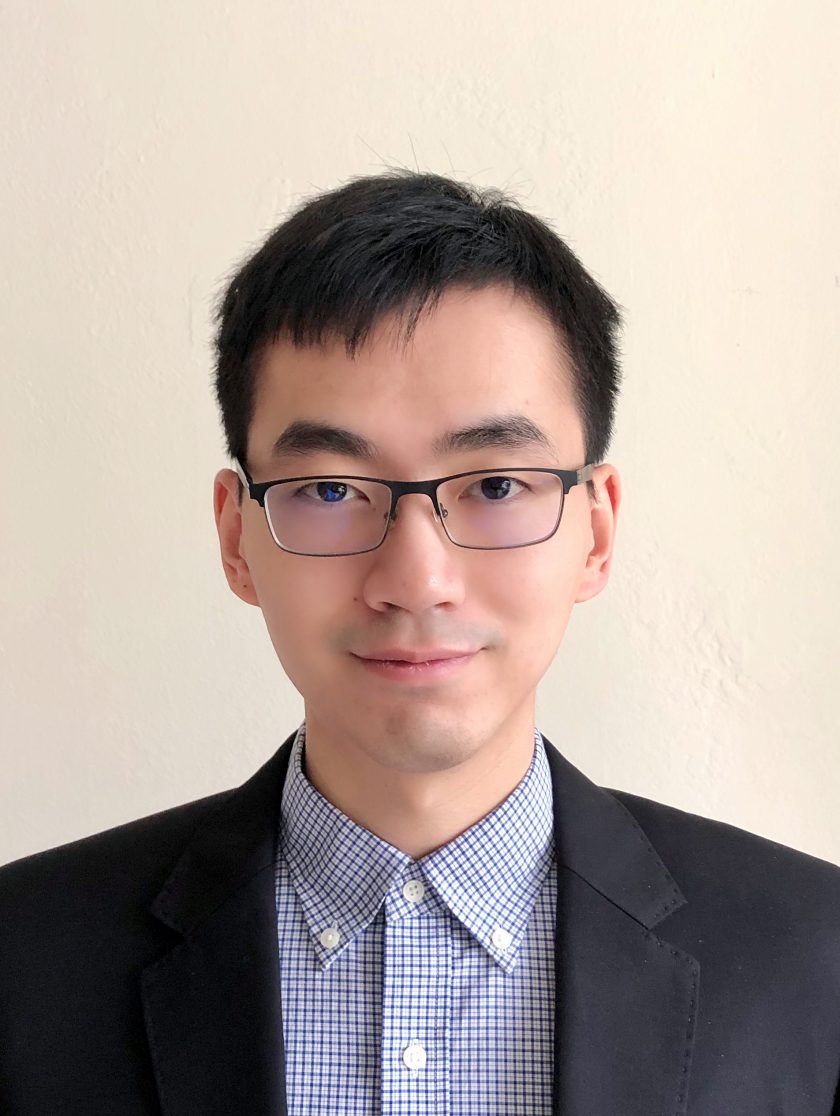
Junjie Qin (He/Him)
Purdue University
ECE 037
19 Feb 2026, 10:30am until 11:30am
Baosen Zhang