

By Wayne Gillam / UW ECE News
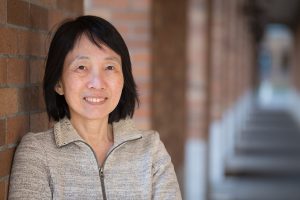
Professor Lih-Yuan Lin was recently elected to the NAI 2025 Class of Fellows. This distinction recognizes her influential contributions to nanotechnology, photonics, and optoelectronics — fields that are shaping the future of technology. Photo by Ryan Hoover / UW ECE
The University of Washington Department of Electrical & Computer Engineering (UW ECE) congratulates Professor Lih-Yuan Lin, who has been elected into the National Academy of Inventors (NAI) 2025 Class of Fellows. This distinction recognizes her outstanding work and lasting impact in nanotechnology, photonics, and optoelectronics — fields that are shaping the future of technology. Lin is one of only 10 UW faculty members to ever receive this honor. She will be formally inducted as an NAI Fellow and presented with a medal by a senior official of the United States Patent and Trademark Office at the NAI 15th Annual Conference on June 4, 2026, in Los Angeles, California.
“We are immensely proud of Lih-Yuan and all she has achieved,” said UW ECE Professor and Chair Eric Klavins. “Her research and teaching are exemplary, and her many inventions are in a wide span of academic disciplines. She is deeply committed to her students and works with them to bring research into practical, real-world applications.”
The NAI Fellowship, established in 2012, honors inventors whose work has made exceptional contributions to the nation’s innovation ecosystem, economic development, and society. Today, it is widely regarded as the highest professional distinction for academic inventors. The 2025 Class of Fellows includes 169 distinguished academic and institutional inventors from 127 universities, government agencies, and research institutions across 40 states and 16 international organizations. Collectively, NAI Fellows hold over 86,000 U.S. patents, have developed 20,000 licensed technologies, and according to a recent NAI press release, have contributed to innovations generating an estimated $38 trillion in revenue and 1.4 million jobs.
“I believe the future of our research lies in creating technologies that directly improve quality of life,” Lin said. “From enabling faster, more sustainable communication networks to developing advanced sensing systems for healthcare, my goal is to ensure these innovations serve society and address global challenges.” — UW ECE Professor Lih-Yuan Lin
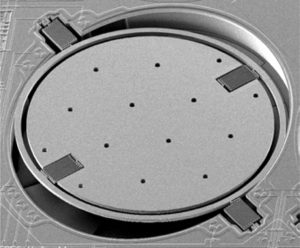
A scanning electron microscope image of a MEMS micro-mirror for optical switches and interconnects. The 800-micron mirror, designed by Lin and her team, was part of her optical switching technology for fiber networks. This pioneering work enabled large capacity data networks to reduce cost and power consumption while paving the way for modern MEMS-based optical circuit switches. Photo courtesy of Professor Lih-Yuan Lin.
“Inventions come from inspirations. I am very fortunate to have worked with people who inspired me throughout my career, and I am deeply honored to be elected as a Fellow of the National Academy of Inventors,” Lin said. “This recognition reflects the collaborative efforts of my students and colleagues over the years. Innovation is about turning ideas into solutions that make a real difference, and I am excited to continue pushing the boundaries of research to address future challenges.”
Lin joined UW ECE in 2003 and is currently the Department’s Associate Chair for Research. She directs the UW Photonics Lab and is a faculty member of the Molecular Engineering & Sciences Institute, the National Science Foundation (NSF) Center for Integration of Modern Optoelectronic Materials on Demand, and the Institute for Nano-engineered Systems. She is also an affiliate faculty member of the Clean Energy Institute. In addition to holding 41 granted patents, she has over 100 journal publications, over 180 conference papers, and five book chapters to her name. Her work has been cited nearly 10,000 times. Lin’s research projects at the UW have included nanophotonic devices using solution-processed materials, optoelectronics driven by artificial intelligence, nanostructure-enhanced laser tweezers, biophotonics, and optical micro-electro-mechanical systems (MEMS).
Lin received her doctoral degree in electrical engineering in 1996 from the University of California, Los Angeles (UCLA). After graduating, she worked at AT&T Labs-Research from 1996 to 2000 as a senior technical staff member on micromachined technologies for optical switching and lightwave communication systems. Then, prior to joining UW ECE, she worked at Tellium, Inc. from 2000 to 2002 as a director of optical technologies. At Tellium, she co-led the company’s research and development effort on high-port-count MEMS optical crossconnects. Over the years, she built a strong reputation for innovation, invention, and connecting her research with industrial and entrepreneurial applications.
In addition to becoming an NAI Fellow, Lin has been recognized by many other awards and honors, including receiving an MIT Technology Review Award in 2003, and becoming an Institute of Electrical and Electronics (IEEE) Fellow in 2010, an Optica Fellow in 2020, and an American Institute for Medical and Biological Engineering (AIMBE) Fellow in 2024.
Pioneering innovations in MEMS, optoelectronics, and photonics
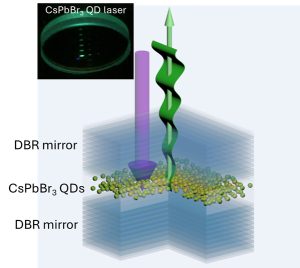
A schematic and photograph (inset) of a perovskite vertical-cavity surface-emitting laser — one example of Lin’s work in nanophotonic devices. This laser uses distributed Bragg reflectors (DBRs) and all-inorganic cesium lead bromide (CsPbBr3) perovskite quantum dots, which have emerged as highly promising solution-processed materials for the next generation of light-emitting applications. Photo courtesy of Professor Lih-Yuan Lin.
Lin’s career is marked by groundbreaking contributions that span multiple fields, including MEMS technology, solution-processed optoelectronics, and nanophotonics. And she started inventing early in her academic career. As a graduate student at UCLA, Lin invented the first MEMS-based Fresnel lens, a breakthrough that made headlines in photonic technology circles.
At AT&T Labs-Research, she demonstrated the first MEMS optical cross-connect for high-capacity fiber networks, sparking an industry-wide effort involving major corporations and startup companies. She subsequently created several more inventions at AT&T, resulting in 23 patents that were of high commercial value to the company. She was later recruited by Tellium, Inc. to commercialize related technologies.
The MIT Technology Review Award Lin received in 2003 recognized her invention of MEMS optical switching technology and the resulting contributions to optical fiber networks. She was the first person to propose, patent, and implement MEMS-based optical switches to enable large capacity data networks with reduced cost and power consumption. This pioneering work laid the foundation for modern MEMS-based optical circuit switches.
At UW ECE, Lin has continued to push boundaries, leading research on solution-processed optoelectronic materials and semiconductor quantum dots for photonic devices and systems while continuing research on optical MEMS. She has also developed these technologies for biomedical applications such as neurostimulators and biomedical imaging. For example, from 2009 to 2012, she was the principal investigator of a National Institutes of Health bioengineering research grant to develop next generation fiber-optic endoscopes and molecular contrast agents for early cancer detection. In this work, she led a team of five interdisciplinary investigators, and under her leadership and vision, the five-year grant led to 20 impactful publications.
In recent years, Lin’s research group has focused on metal halide perovskites for advanced optoelectronic applications, including displays and lighting, lasers, light-emitting diodes (LEDs), photodetectors, solar cells, and computer memory. Her team’s work has produced seven U.S. patents and highly cited papers, including one with over 1,000 citations.
Turning research into real-world impact
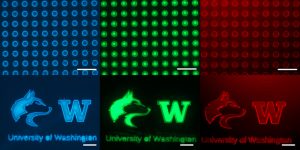
Fluorescent images of patterned color-converter materials made from quantum dots and perovskite for micro-display applications. The white scale bar is 200 microns wide. Lin and her team fabricated multicolor patterns with red, green, and blue pixels on a single substrate, a technique applicable to high-resolution displays used in televisions, monitors, smartphones, augmented and virtual reality, wearable tech, and more. Photo courtesy of Professor Lih-Yuan Lin.
Lin’s approach to research goes beyond discovery. She is committed to translating inventions into commercial products and empowering her students to become leaders in innovation and entrepreneurship. Many of her former students now hold leadership roles in industry, and some have co-founded successful startups, including LumiSands and Vuemen, both of which originated from her lab. LumiSands develops environmentally friendly silicon quantum dots for lighting and bio-labeling, while Vuemen is advancing low-cost micro-LED manufacturing solutions. These ventures received support through UW CoMotion’s Innovation Gap Fund program and earned an NSF Partnership for Innovation award as well as an NSF Small Business Technology Transfer (STTR) Phase 1 award.
Throughout her career, Lin has pioneered technologies, such as micro-electromechanical optical switches, efficient solar cells based on quantum dots, and optical tweezers for biological sampling. She has contributed to optogenetics, the light-based control of biological cells, using quantum dots as a light source. She has explored the use of quantum dots as optical waveguides as well as applications of metal halide perovskites in integrated photonics. And she has followed through on turning her research into real-world impact. Overall, her vision is clear.
“I believe the future of our research lies in creating technologies that directly improve quality of life,” Lin said. “From enabling faster, more sustainable communication networks to developing advanced sensing systems for healthcare, my goal is to ensure these innovations serve society and address global challenges.”
Learn more about UW ECE Professor Lih-Yuan Lin on her bio page. To learn more about the NAI, visit their website, read the NAI announcement, and the full list of 2025 NAI Fellows.